

The Emperor’s New Sushi
If I had grown up in Japan, my preferences would be more sophisticated.

This post is going to make me unpopular; in fact, I expect more than a few Substack cancellations, but please bear with me. I travel a lot for Milk Street and every destination has great food, good food and, always, bad food. Some of this is simply a matter of cultural preference. When Fuchsia Dunlop (the author of The Food of Sichuan) first moved to China and started her culinary studies, she found the Chinese preference for chewy, mucilaginous foods (chicken feet for example) off-putting but, over time, she fell in love with them. Fair enough.
But does that mean that all dishes are relative, that there is no hierarchy of bad, good and great? I would argue that these notions can co-exist. Here’s an example. A perfectly made French fry is a towering culinary achievement—crispy and crunchy on the outside and light and creamy on the inside. But yuca fries made with cassava instead of russets are a bit denser, unlike their airy potato counterparts. This does not mean that millions don’t enjoy them—I would simply argue that any side-by-side taste test would result in the potato version as the clear winner.
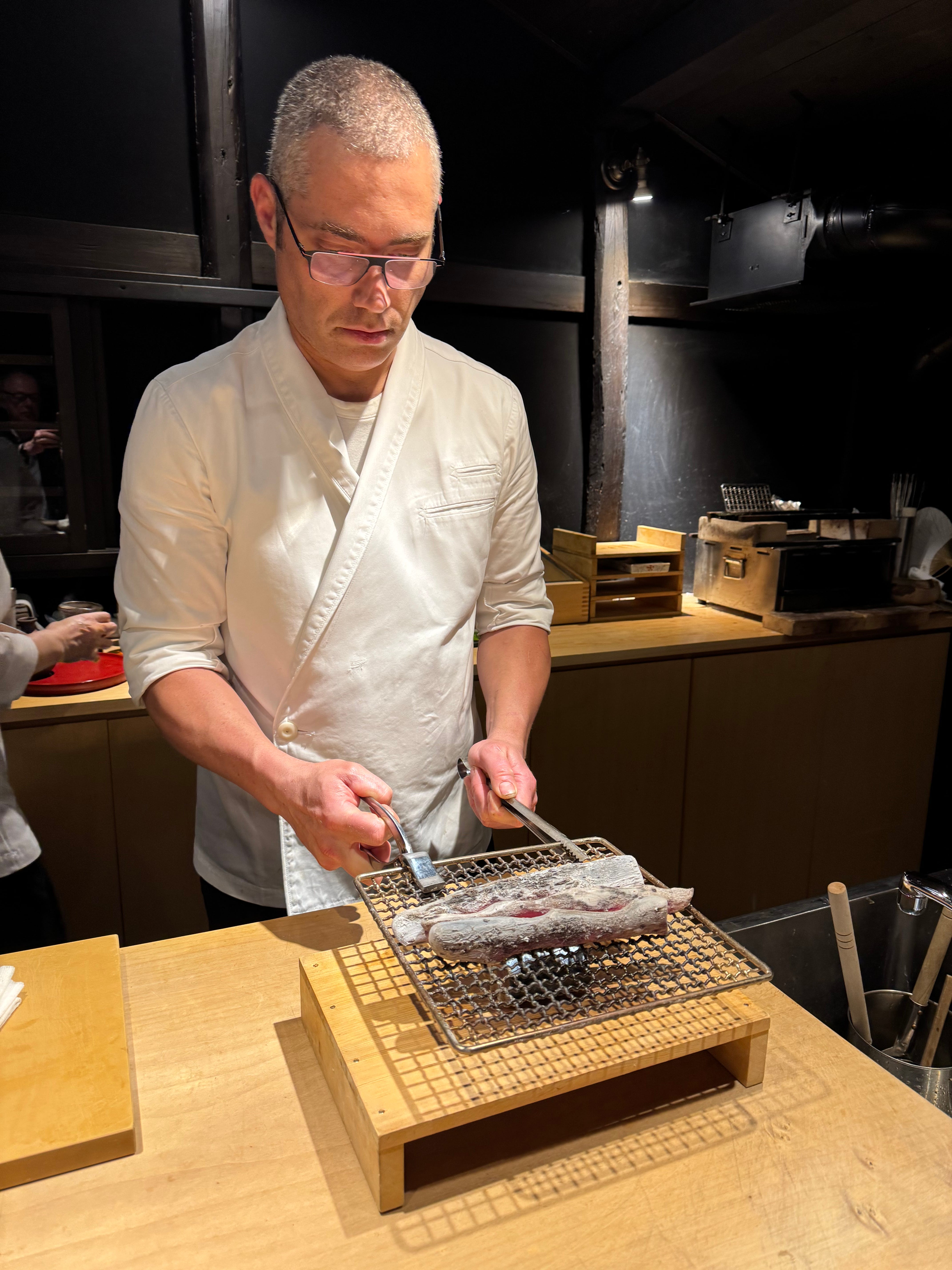
During a recent trip to Japan, I spent two evenings eating omakase, which I dearly love. But do I have to love every course, like the one made from raw shrimp innards or fish sperm or fish scales? (To be honest, the fish sperm custard was quite tasty as was the light, binchoton grilled fish with scales.) It seems to me that any culinary traveler has both a right and a responsibility. You have the responsibility to try everything without pre-judging, giving a dish time to lure you into its good graces but, you also have the right to say, “Hey, given my personal palate, raw shrimp innards is a bridge too far.” (If I had grown up in Japan, my preferences would be more sophisticated. Put another way, my current opinions about sushi et al. are probably irrelevant.)
But, sometimes, let’s just say it out loud, it’s mediocre food. You can find heavy, thick scallion pancakes in Taipei and so-so mole negro in Oaxaca. (The best mole negro, to my mind, is served in Austin at El Naranjo—it’s divine.) Yes, I urge you to spend time with other people from other cultures and treat their food responsibly, with great passion and courage, but don’t be afraid to bring your own palate to bear. Many times, it’s our unfamiliarity with a cuisine—it’s how our palates were conditioned in childhood—and other times, it’s just bad food. It’s worth noting the difference.
Chris’ Picks
What I am Watching: Wages of Fear (1953) is the original movie (many remakes) about driving two trucks packed with nitroglycerin to the site of an oil well fire. Let’s just say that there is no happy ending. The first 20 minutes takes place in a small town, Las Piedras, which offers an otherworldly aura of time gone by: faces loaded with character, time standing still, a culture that has erased from the earth because it is too slow moving. It’s a masterpiece.
What I’m Reading: The Wide Wide Sea by Hampton Sides is an adventure story about James Cook’s third and final voyage, one that was aimed at discovering a Northwest Passage that joined the Pacific and the Atlantic. The ships were roughly 100 feet long and the voyages lasted three years. Although life on board was difficult—rotting salt meat, weevil-infested biscuits, and the stink of men jammed together below decks, many sailors were addicted to the adventure and even though they had large families ashore, they would readily sign up for yet another voyage. Cook, by the way, was the first captain to prevent scurvy which, during the 18th century, killed up to 50% of any crew out on a multi-year expedition. Fact is almost always more compelling than fiction.
Why I Love My Cazuela: Simmering a stew or braise on top of the stove ain’t always easy. Either the gas burner cannot adjust low enough to maintain a low simmer or it needs constant adjustment. This is particularly true, I find, with the typical 6-quart enameled cast iron Dutch oven—it conducts heat almost too well for slow, gentle stovetop cooking. Instead, an earthenware cazuela is the perfect choice. It maintains a low constant simmer for hours without constant adjusting. Yes, you can also sauté in it, but you are less likely to burn the soffrito. And, not to be a kitchen romantic, cooking in an earthenware pot connects one to the great history of the culinary arts. It just feels better. (Maybe that is my 60s upbringing coming to the fore?)
Cookbook spotlight: Patience Gray was the author of Honey from a Weed, an extraordinary cookbook that was born from her years living in rural Europe including Naxos and finally landing in Puglia in a former masseria (animal barn), overlooking the Ionian Sea where she and her sculptor husband made their final home. Patience was a proponent of simplicity in the kitchen and the health benefits of wild greens and weeds.

The recipes pre-date the slow food movement, but are in keeping with the notion of local ingredients and minimal preparation, including a baked mashed potato cake from Campagna, baked salt cod, spaghetti with peas, a Catalan omelette, a mortar and pestle Pesto, and Paella, not to mention more obscure offerings including goat’s head and pig’s lungs. The title of the book probably hearkens back to Shakespeare who wrote, “Thus may we gather honey from the weed / and make a moral of the devil himself.” Today, it is a mostly forgotten treasure but worth adding to your cookbook libary (as is Adam Federman’s biography of Patience, Fasting and Feasting: The Life of Visionary Food Writer Patience Gray).
I first tasted Ankimo while on a cruise ship tour of a market in Tokyo; I had broken off from the crowd and entered what appeared to be a very small, interesting restaurant on a side street primarily because it served Uni. What a fabulous adventure. I had never seen Ankimo on a menu (monkfish liver!) and said to myself “self, what have you got to lose” so I ordered it along with the Uni and Sashimi. What an extraordinary revelation - the liver (prepared by rinsing in sake, then any veins removed, rolled into cylinders and then steamed) was tasty with the remarkable sauce that accompanied it and was deeply satisfying - one of the highlights of my journey of discovery in Japan. So, be adventuresome and explore within your sensibilities (as suggested by Kris) and be open-minded!!!
There are few newsletters that I actually read, yours is one of them. This was an equally fun and thoughtful read. I am enjoying your Substack!