

Melting Tea Cake
A 1960s recipe–half pound cake and half sponge cake–forced us into the deep, complex world of cake baking, with an excellent result.

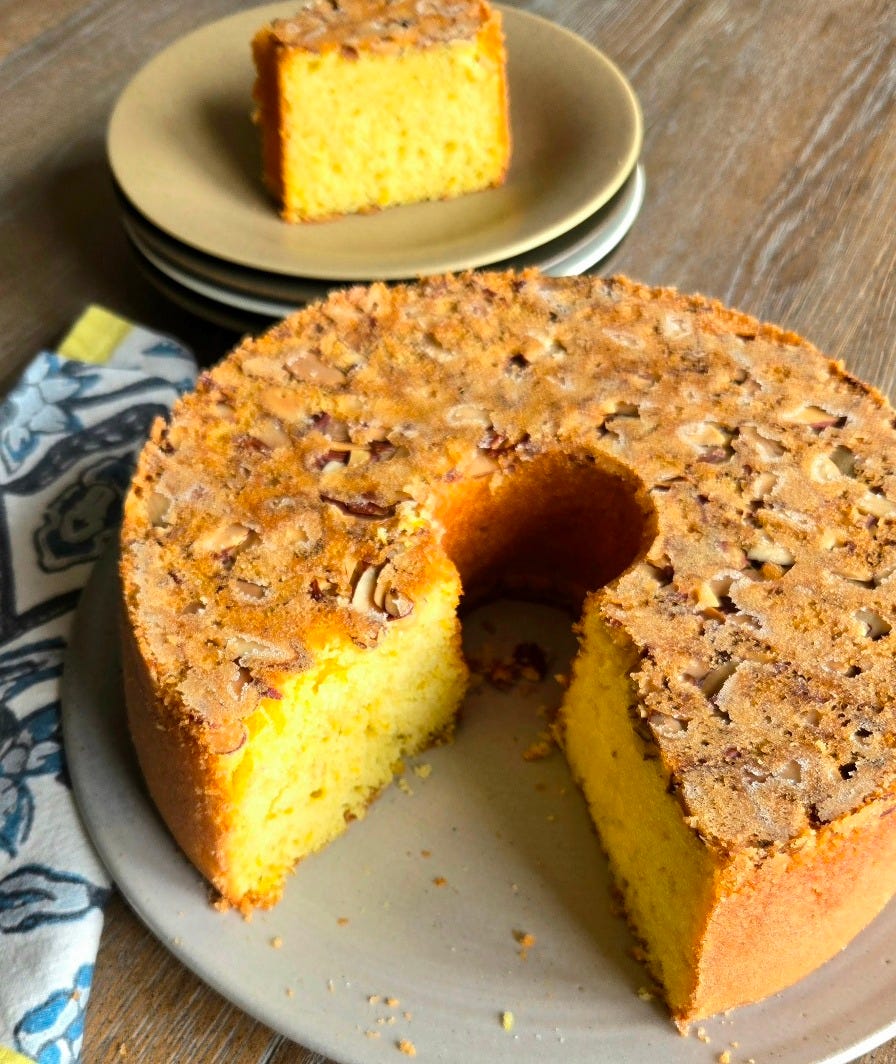
Once in a great while, I come across a recipe from the past that sounds intriguing, in this case, the Melting Tea Cake from Paula Peck’s “The Art of Good Cooking” from the 1960’s. What caught my attention was the notion that this is a half sponge and half pound cake. That is a worthy goal, since pound cakes are dense and rich and sponge cakes can be a bit airy. But this is one recipe that almost did me in.
Let’s start with the eggs. This recipe started with an egg foam (whole eggs and sugar heated over a bain-marie and then whipped). The problem was that this delicate foam is hammered by the addition of over a cup of flour and a full cup of melted butter. When I tested this approach, the cake never rose much in the oven. The egg foam collapsed under the weight of all that flour and butter.
I then tried variations with the eggs separated, using beaten egg whites to do the heavy lifting. Yolks were hand-mixed with butter/sour cream and flour, then the whites were whipped with sugar and cream of tartar to a medium-stiff peaks. While some of these test cakes rose a bit in the oven, they collapsed while cooling and the crumb was often unevenly textured inside.
I then split the sugar between the yolk mixture and the meringue, and aerated both. I did the yolks in the stand mixer with the whisk attachment, and I whisked the whites by hand to make a meringue, again using 6 eggs. This cake had a nice, velvety texture, but again, no loft or half-sponge-like quality. Plus, whipping meringue by hand isn’t for everyone.
I then decided to re-visit the original whole-egg foam, with some adjustments. Instead of 4 eggs + 4 yolks, I tried 6 whole eggs with no added yolks (along with 6 ounces each sugar, butter, and flour.) I heated the eggs with sugar over a bain-marie, then whipped with a mixer to peak volume. Then, instead of folding in flour and butter by hand, I used the mixer to add these, but added the melted butter first, flour last, and finished folding by hand. The batter itself was the lightest of all the tests and rose more in the oven.
To fill a tube pan, though, I still wanted more height, so I upped everything from 6 to 7 just to see if it would work: 7 eggs, 7 ounces each sugar, butter, and flour. This worked well and the cake was taller. There are no chemical leaveners in Peck’s recipe, but I settled on baking powder for overall loft and a bit of baking soda to balance out the citrus juice.
I tested various flavor options and almond with orange was the winner. A sprinkling of toasted, sliced almonds, added to the bottom of the greased tube pan looks great after unmolding, but is optional.
So now I finally had something in between sponge and pound cake, the perfect recipe for a light but toothsome tea cake, and one that can be flavored any way you like.
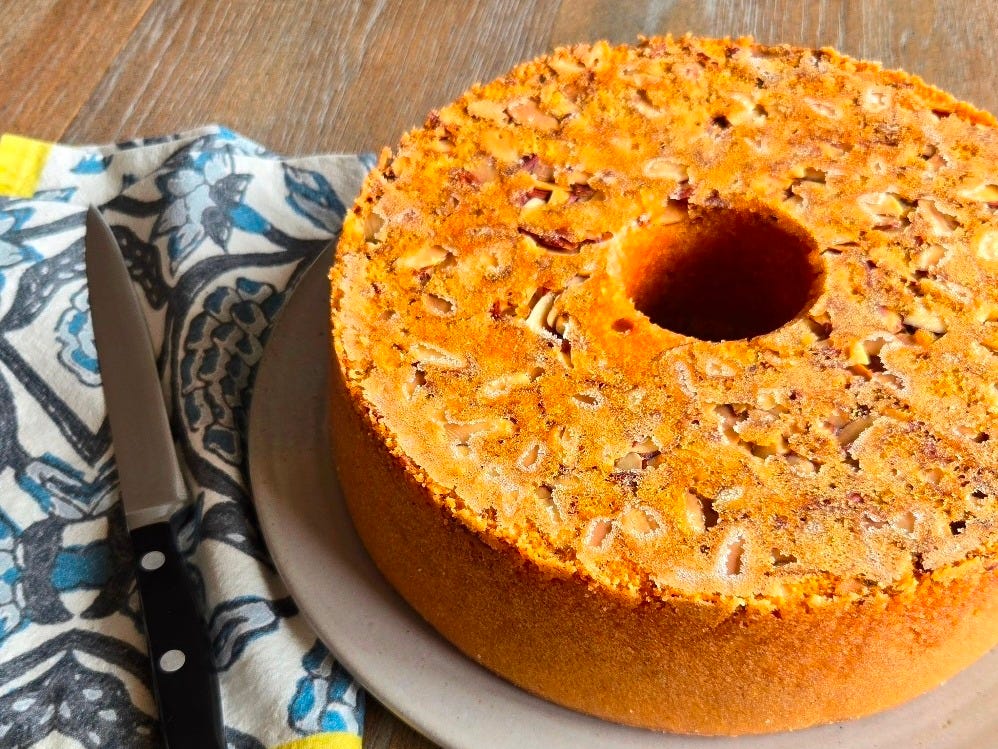
Melting Tea Cake with Orange and Almond
